
Ray sells hardware in Gulf Breeze. Here's how surcharging works in his store.
Contractors who pay with credit cover the surcharge. Everyone on debit pays the shelf price.
Before any surcharge shows up, Upcharge checks the card, Florida's rules and the card brand's limit. Then it adds the right amount, or nothing.
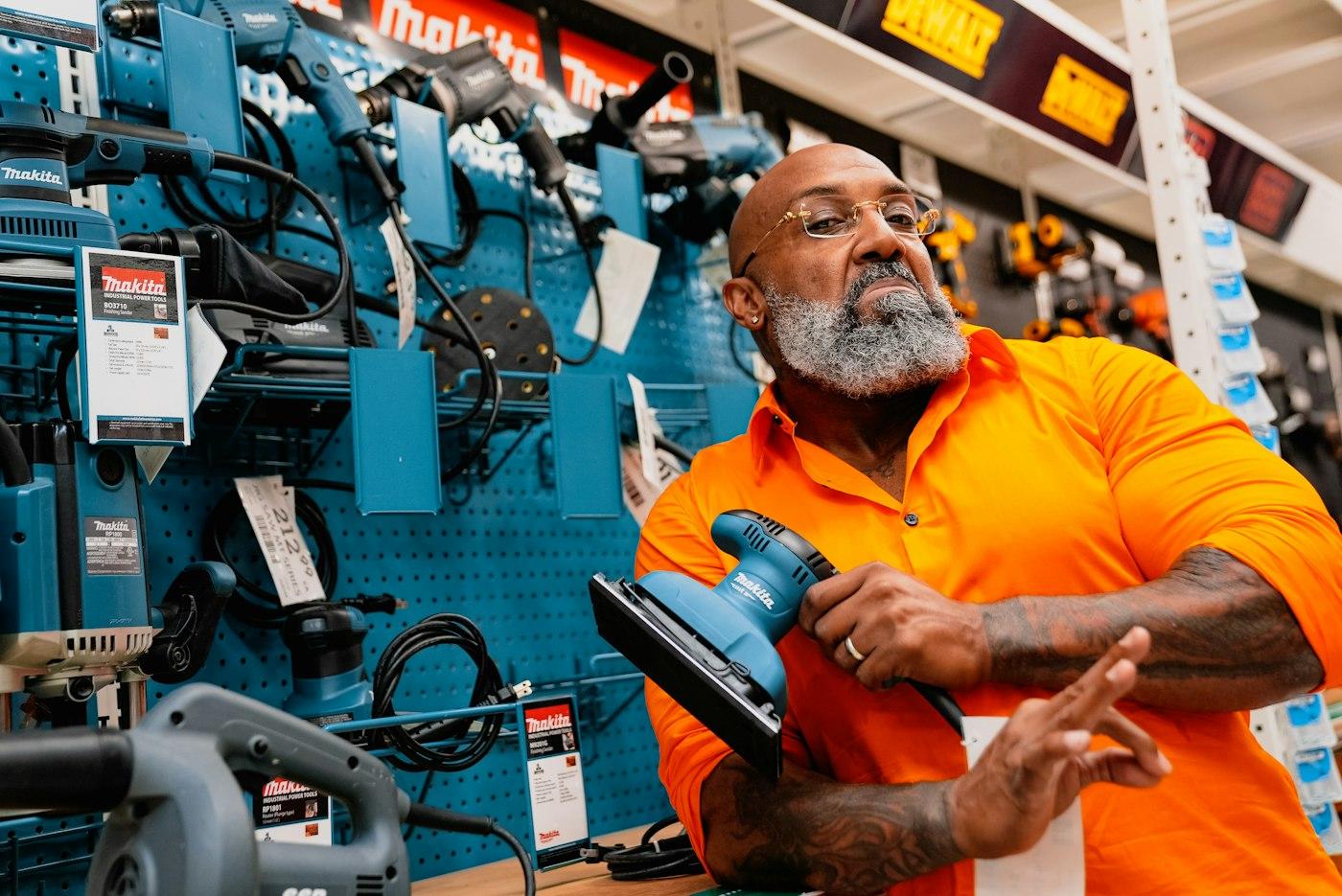
A contractor buys a $240 drill kit with his Visa
Here's what happens in the second between the tap and the total on the screen.
How the surcharge amount is set
Each card brand sets its own rules for surcharging. Visa allows a surcharge of up to 3%, but never more than the merchant's actual cost of accepting the card.
Ray pays 2.6% to process Visa credit cards, so that's the maximum surcharge he can charge his customer: $6.24 on a $240 purchase.
If the customer uses a debit card instead, no surcharge applies. Upcharge automatically identifies the card type and applies the appropriate rules before calculating the surcharge.
He saw it coming, and it's on the receipt
There's a sign on Ray's front door and another at the register. The surcharge showed on the terminal before the contractor approved it, and it's printed as its own line on the receipt, never mixed into the price.
Those three things, the sign, the screen and the receipt, are what the card brands require. Upcharge handles the screen and the receipt. Ray put up the signs.
Who does what
What Upcharge handles
- Automatically identifies credit and debit cards, applying surcharges only to eligible credit transactions
- Calculates surcharges based on card brand rules, applicable state laws and your processing costs
- Clearly displays surcharges at checkout and on receipts
- Manages daily batches, settlements and payouts
- Provides a complete merchant portal to manage transactions, track payouts, view reports, handle disputes and oversee payment activity, all in one place
- Helps you stay current with changing surcharge requirements
What Ray does
- Displays the required surcharge notices at his entrance and checkout
- Makes sure his staff understands how to explain surcharges to customers
- Reinvests the money he saves into growing his business
If Ray's store were somewhere else
In Colorado, he'd pick between a 2% cap ($4.80 on that drill kit) and a cap at his actual cost, and post Colorado's wording for that option. In New York, his sign would need to show the full credit price in dollars and cents. In Connecticut, Maine or Massachusetts, there'd be no surcharge at all, and Upcharge wouldn't add one. See the rules in your state
Stop paying 3% to get paid
Leave your number. We'll run your real statement and show you exactly what you'd keep.